 ®
®
Semaglutide vs. Tirzepatide: What’s The Difference?
Two GLP-1 medications, two different mechanisms, and one actual head-to-head trial. Here is what the published evidence shows — and what most comparisons get wrong.
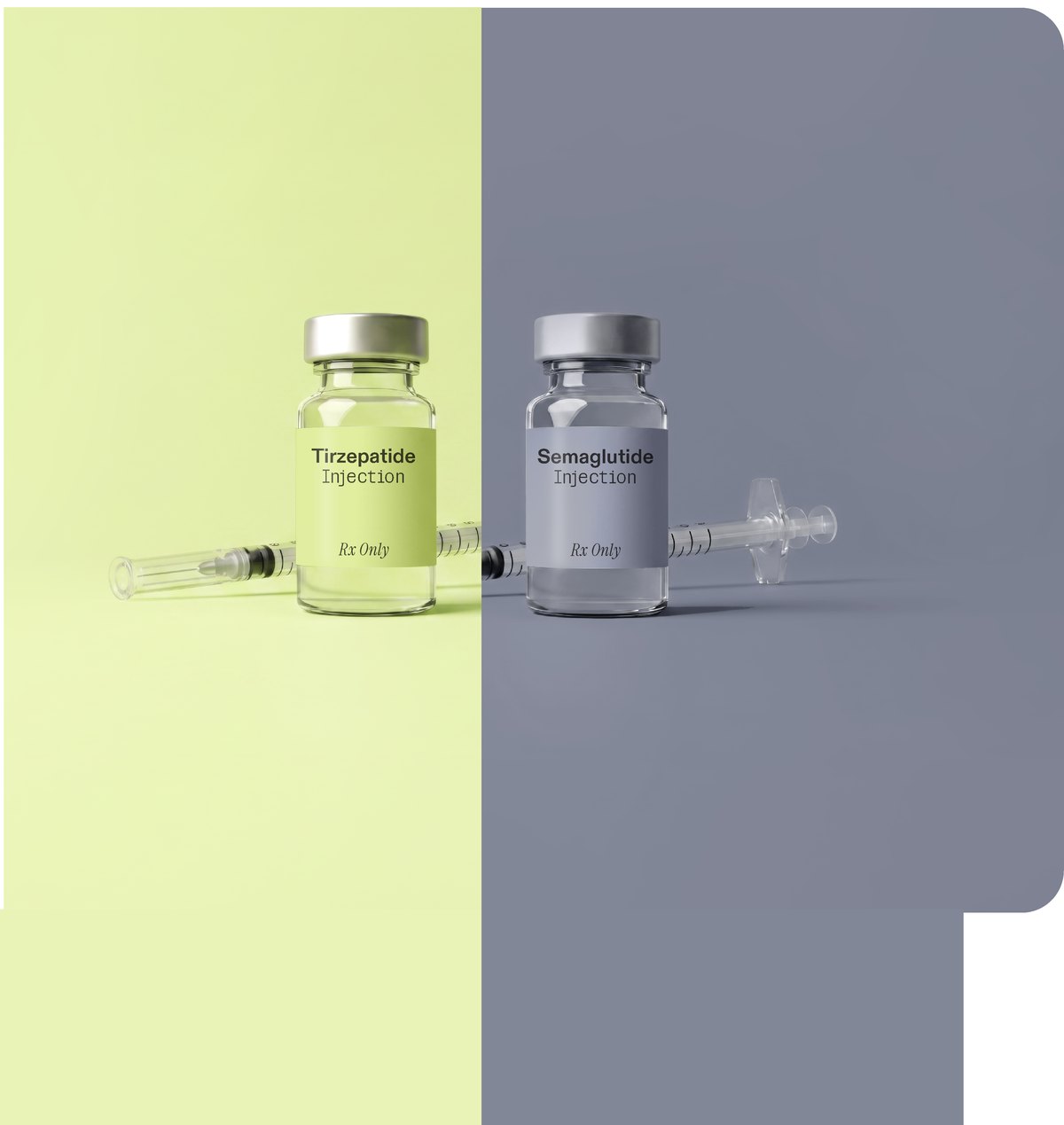
Semaglutide and tirzepatide are the two most-discussed weight-management medications in the world, and most comparisons between them are wrong in the same way: they put results from two different trials side by side and call it a comparison. Since 2025 there has been an actual head-to-head trial. Start there.
The Short Answer
Tirzepatide activates two receptors; semaglutide activates one. In the only randomised head-to-head trial, tirzepatide produced more weight loss — −20.2% versus −13.7% of body weight over 72 weeks — with similar rates of nausea and abdominal pain, and fewer people stopping because of side effects.1
That is the headline. The rest of this article is why it happens, what the numbers do and don't mean, and where the two drugs differ on things other than the scale.
How They Work
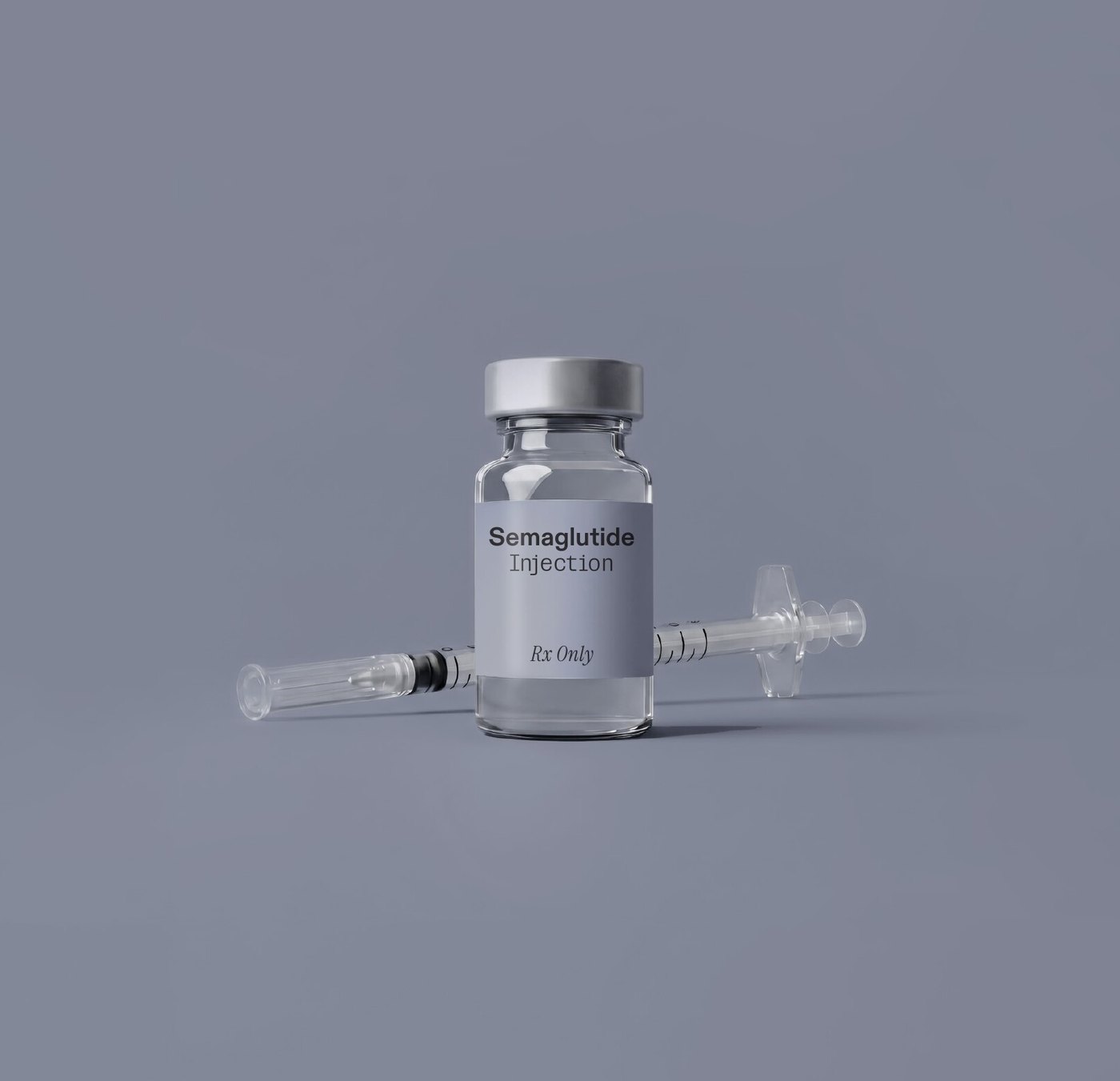
Semaglutide is a GLP-1 receptor agonist. It mimics glucagon-like peptide-1, an incretin hormone your gut releases when you eat, and activates that one receptor. The effects: glucose-dependent insulin release, suppressed glucagon, slower gastric emptying, and action on the brain's appetite and satiety centres.
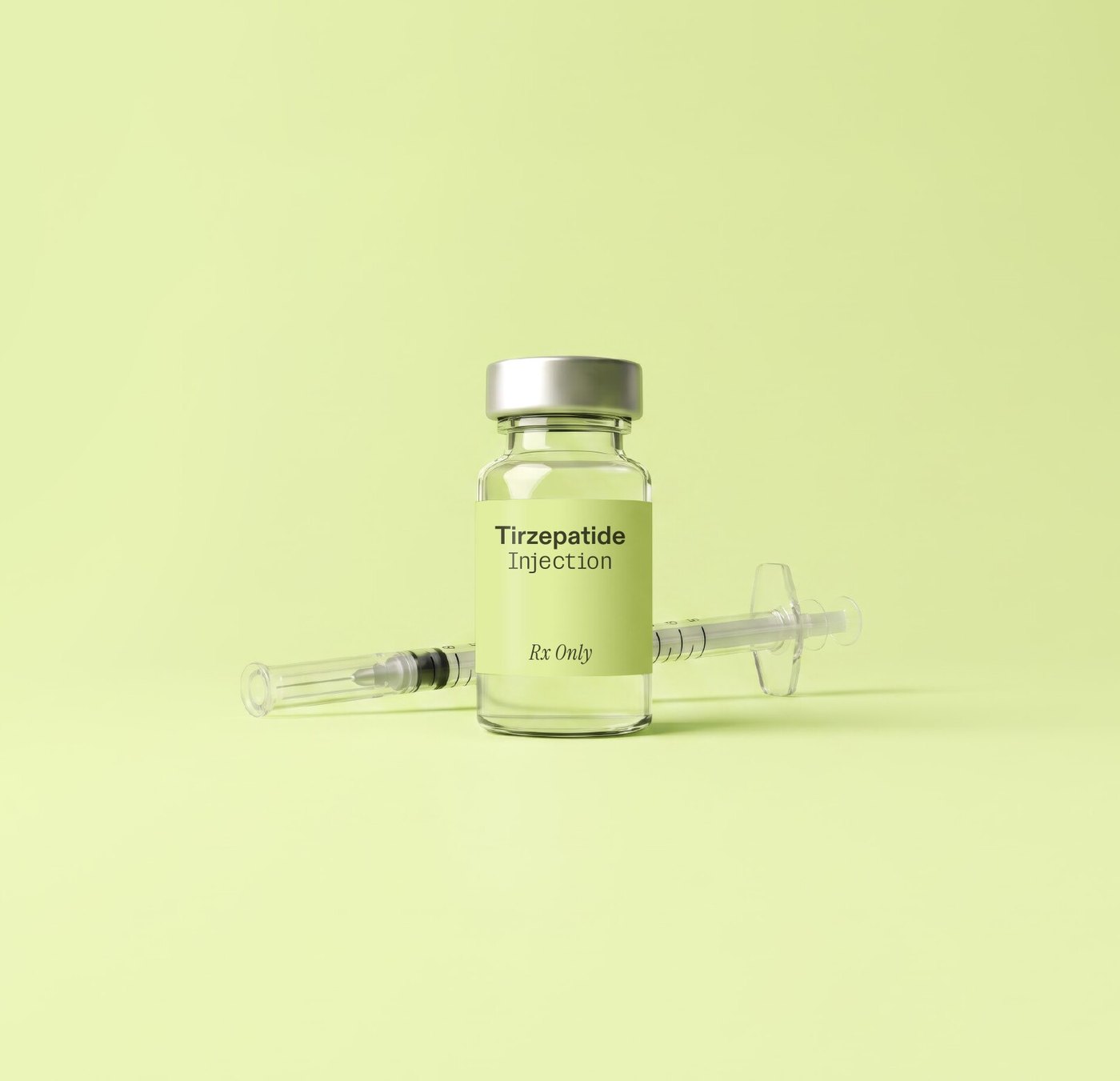
Tirzepatide is a dual GIP/GLP-1 receptor agonist. It does everything above and also activates the receptor for glucose-dependent insulinotropic polypeptide (GIP), a second incretin hormone.
Why the second receptor helps is still being worked out. A 2026 review in Diabetes Therapy describes the leading hypothesis: preclinical work suggests the added weight-loss benefit depends on GIP-receptor-expressing neurons in the central nervous system, and that GIP agonism in the hindbrain may blunt the nausea normally driven by GLP-1 agonism — more weight loss without proportionally more side effects.10 That mechanism is substantially animal data. Treat it as a good working explanation, not a settled fact.
Side By Side
| Semaglutide | Tirzepatide | |
|---|---|---|
| Mechanism | GLP-1 receptor agonist | Dual GIP + GLP-1 receptor agonist |
| Peptide length | 31 amino acids, 94% homologous to native GLP-1 | 39 amino acids, with non-natural amino acids at two positions |
| Brand names | Ozempic (T2D), Wegovy (weight), Rybelsus (oral, T2D) | Mounjaro (T2D), Zepbound (weight) |
| FDA approval | Ozempic 2017 · Rybelsus 2019 · Wegovy 2021 | Mounjaro 2022 · Zepbound 2023 |
| Dosing | Once weekly injection (Rybelsus once daily oral) | Once weekly injection |
| Dose range (weight) | 0.25 → 2.4 mg weekly | 2.5 → 15 mg weekly |
| Half-life | About 1 week | About 5 days |
| Pivotal trial result | STEP 1: −14.9% at 68 weeks | SURMOUNT-1: −15.0 / −19.5 / −20.9% at 72 weeks (5 / 10 / 15 mg) |
| Head-to-head (SURMOUNT-5) | −13.7% at 72 weeks | −20.2% at 72 weeks (p<0.001) |
| Reached ≥25% weight loss | 16% | 32% |
| Most common side effects | Nausea 44%, diarrhea 30%, vomiting 24%, constipation 24% | Nausea 28–29%, diarrhea 21–23%, vomiting 11–13%, constipation 11–17% |
| Stopped for side effects (head-to-head) | 5.6% | 2.7% |
| Boxed warning | Thyroid C-cell tumors in rodents; contraindicated with MTC or MEN 2 history | Identical warning and contraindications |
| Cardiovascular outcomes | SELECT: N=17,604, MACE hazard ratio 0.80 | SURPASS-CVOT: N=13,299, non-inferior to dulaglutide, not superior. SUMMIT (HFpEF): hazard ratio 0.62 |
The Head-To-Head Trial, In Detail
SURMOUNT-5 was a randomised, open-label phase 3b trial across 32 U.S. and Puerto Rico sites. It enrolled 751 adults with obesity and without type 2 diabetes, mean age 45, and titrated both drugs to their maximum tolerated approved dose over 72 weeks.1
- Body weight: −20.2% on tirzepatide versus −13.7% on semaglutide (p<0.001) — roughly 50 lb against 33 lb on average.
- Waist circumference: −18.4 cm versus −13.0 cm (p<0.001).
- Reached at least 25% weight loss: 32% versus 16%.
- Nausea (~44%) and abdominal pain (~25%) occurred at similar rates in both arms.
- Discontinuation for adverse events: 2.7% versus 5.6%.
What The Pivotal Trials Showed On Their Own
STEP 1 randomised 1,961 adults with obesity or overweight to semaglutide 2.4 mg or placebo for 68 weeks. Mean weight change: −14.9% versus −2.4%. Half the semaglutide group lost 15% or more of body weight.2
SURMOUNT-1 randomised 2,539 adults to tirzepatide 5, 10 or 15 mg for 72 weeks. Mean weight change: −15.0%, −19.5% and −20.9% versus −3.1% on placebo. At 15 mg, 63% of participants lost 20% or more.3
These are separate trials with different populations, run in different years. Comparing −14.9% to −20.9% across them is the mistake most articles make. Use SURMOUNT-5 for comparison and use these two for what each drug does on its own.
Neither Drug Is A Course You Finish
STEP 4 tested this directly. After a 20-week run-in on semaglutide, 803 participants were randomised either to continue or to switch to placebo. Those who continued lost a further 7.9% of body weight by week 68. Those switched to placebo regained 6.9% — a 14.8-percentage-point swing.4
These medications maintain weight loss while you take them. There is no trial-defined course length; how long you stay on treatment is a clinical decision between you and your provider, not a protocol.
Beyond The Scale
Semaglutide has the larger cardiovascular outcomes dataset. SELECT enrolled 17,604 adults with obesity and established atherosclerotic cardiovascular disease but without diabetes. Over a mean 34 months, major adverse cardiovascular events occurred in 6.5% on semaglutide versus 8.0% on placebo — a hazard ratio of 0.80.7 That population is high-risk by design, so the result should not be generalised to everyone.
Tirzepatide's cardiovascular trial, SURPASS-CVOT, compared it against dulaglutide — an active GLP-1 drug, not placebo — in 13,299 people with type 2 diabetes and established disease. It met non-inferiority but not superiority.8 Separately, SUMMIT studied 731 people with heart failure with preserved ejection fraction and obesity, and found a hazard ratio of 0.62 for cardiovascular death or worsening heart failure.9
One Thing To Be Careful About
Everything above describes the FDA-approved branded medications at approved doses, under trial-level clinical supervision. Compounded versions of these molecules are not FDA-approved: FDA does not review them for safety, effectiveness or quality before they reach patients, and has documented problems in the wider market including unapproved salt forms, untested additive combinations, and dosing errors from patients self-measuring out of multi-dose vials.11
The regulatory position is also moving. The shortages that broadly permitted compounding of these molecules ended in December 2024 and February 2025, and in April 2026 FDA proposed permanently excluding semaglutide, tirzepatide and liraglutide from bulk compounding.11 Any provider prescribing a compounded GLP-1 should be able to explain to you why it is appropriate in your specific case, and should discuss the FDA-approved alternatives with you.
So Which One?
That is a clinical decision, and the honest answer is that it depends on more than the efficacy numbers: your medical history, what you tolerate, what you can access, what you can sustain, and what your provider judges appropriate. The trial data says tirzepatide produces more weight loss on average. It does not say tirzepatide is the right medication for you.
References
- Aronne LJ, et al. Tirzepatide as Compared with Semaglutide for the Treatment of Obesity (SURMOUNT-5). New England Journal of Medicine. 2025;393(1):26–36. https://www.nejm.org/doi/abs/10.1056/NEJMoa2416394
- Wilding JPH, et al. Once-Weekly Semaglutide in Adults with Overweight or Obesity (STEP 1). New England Journal of Medicine. 2021;384:989–1002. https://pubmed.ncbi.nlm.nih.gov/33567185/
- Jastreboff AM, et al. Tirzepatide Once Weekly for the Treatment of Obesity (SURMOUNT-1). New England Journal of Medicine. 2022;387:205–216. https://pubmed.ncbi.nlm.nih.gov/35658024/
- Rubino D, et al. Effect of Continued Weekly Subcutaneous Semaglutide vs Placebo on Weight Loss Maintenance (STEP 4). JAMA. 2021;325(14):1414–1425. https://pubmed.ncbi.nlm.nih.gov/33755728/
- U.S. Food and Drug Administration. WEGOVY (semaglutide) injection — full prescribing information. https://www.accessdata.fda.gov/drugsatfda_docs/label/2021/215256s000lbl.pdf
- U.S. Food and Drug Administration. ZEPBOUND (tirzepatide) injection — full prescribing information. https://www.accessdata.fda.gov/drugsatfda_docs/label/2023/217806s000lbl.pdf
- Lincoff AM, et al. Semaglutide and Cardiovascular Outcomes in Obesity without Diabetes (SELECT). New England Journal of Medicine. 2023. https://www.nejm.org/doi/full/10.1056/NEJMoa2307563
- Nicholls SJ, et al. Cardiovascular outcomes with tirzepatide versus dulaglutide in type 2 diabetes (SURPASS-CVOT). New England Journal of Medicine. 2025;393:2409–2420. https://www.tctmd.com/news/surpass-cvot-published-large-trial-confirms-cvd-efficacy-tirzepatide
- Packer M, et al. Tirzepatide for Heart Failure with Preserved Ejection Fraction and Obesity (SUMMIT). New England Journal of Medicine. 2024. https://pubmed.ncbi.nlm.nih.gov/39555826/
- Insights into the Mechanism of Action of Tirzepatide: A Narrative Review. Diabetes Therapy. 2026;17(1):19–40. https://link.springer.com/article/10.1007/s13300-025-01804-w
- U.S. Food and Drug Administration. FDA's Concerns with Unapproved GLP-1 Drugs Used for Weight Loss. https://www.fda.gov/drugs/drug-alerts-and-statements/fdas-concerns-unapproved-glp-1-drugs-used-weight-loss
Written by the Rūl editorial team. Every clinical claim on this page is sourced to the primary literature and listed in the references below. This article is educational and is not medical advice.
Find out what’s clinically appropriate for you.
Take The AssessmentMore From The Health Guide
 Lifestyle
Choosing Your Goals And How To Rule Your Life
The movement, food and sleep behaviours with the strongest evidence behind them — with the actual numbers, and an honest account of where the evidence runs out.
 Science
How Do Peptides Work?
What a peptide actually is, how many exist, the ones already running your physiology, and the three very different things sold under the word.